
PRIMAL Evolved Terrain Types: Beach and Jungle Landmarks
Learn to recognize PRIMAL Evolved's sandy beach shoreline and dense jungle interior, and use their visual cues to tell whether you're at the water's edge or out in the interior.
Quick answer
Two terrains are easy to recognize: the sandy beach shoreline and the dense jungle interior. The beach puts you at the water's edge; the jungle puts you in the interior vegetation. A day/night cycle also changes how clearly you can read either one.
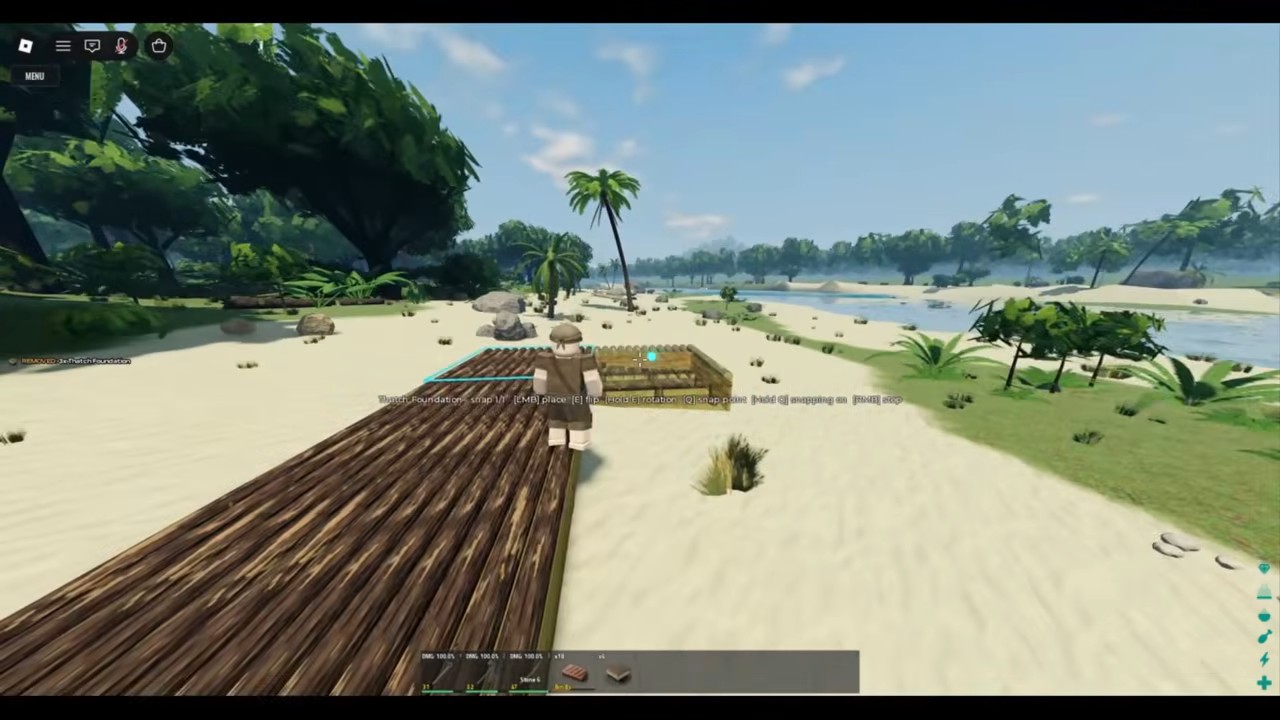
- Beach shoreline: open sand, palm trees, rocks and shallow water — you are at the shore.
- Jungle interior: ferns and large trees in dense cover — you are away from the open shoreline.
- Night: it gets genuinely dark, and a campfire provided light in the night scene, so the terrain is harder to read after dark.
Shoreline and jungle at a glance
To orient yourself, read the ground around you. Two environments have clear visual signatures, and each one tells you which side of the landscape you are on: the open shore or the interior vegetation.
Terrain signatures and what they tell you
- Terrain
- Sandy beach shoreline
- What you see
- Open sand, palm trees, rocks, shallow water
- What it tells you
- You are at the water's edge, on the open shore
- Terrain
- Dense jungle interior
- What you see
- Ferns, large trees, thick plant cover
- What it tells you
- You are in the interior vegetation, away from the open shoreline
What the beach tells you
A sandy beach shoreline is easy to confirm. You are looking at the shoreline when open sand sits alongside palm trees, rocks and shallow water; those elements together form the signature, not any one of them alone. Standing there, you are at the boundary between the land and the shallow water rather than inside the forest.
The open sand is also usable ground. A concrete example: a Thatch Foundation was set down on open sand right by the shoreline. That shows the beach functioning as buildable space, but it is one placement, not a rule that every base has to go on sand. Treat the beach as a landmark and a possible building spot, then decide from there.
What the jungle tells you
The jungle reads as the opposite environment. Dense cover made of ferns and large trees marks the jungle interior, and it is clearly distinct from the open shoreline. When the open sand is gone and you are surrounded by ferns and large tree trunks, you have moved away from the water's edge and into the vegetation.
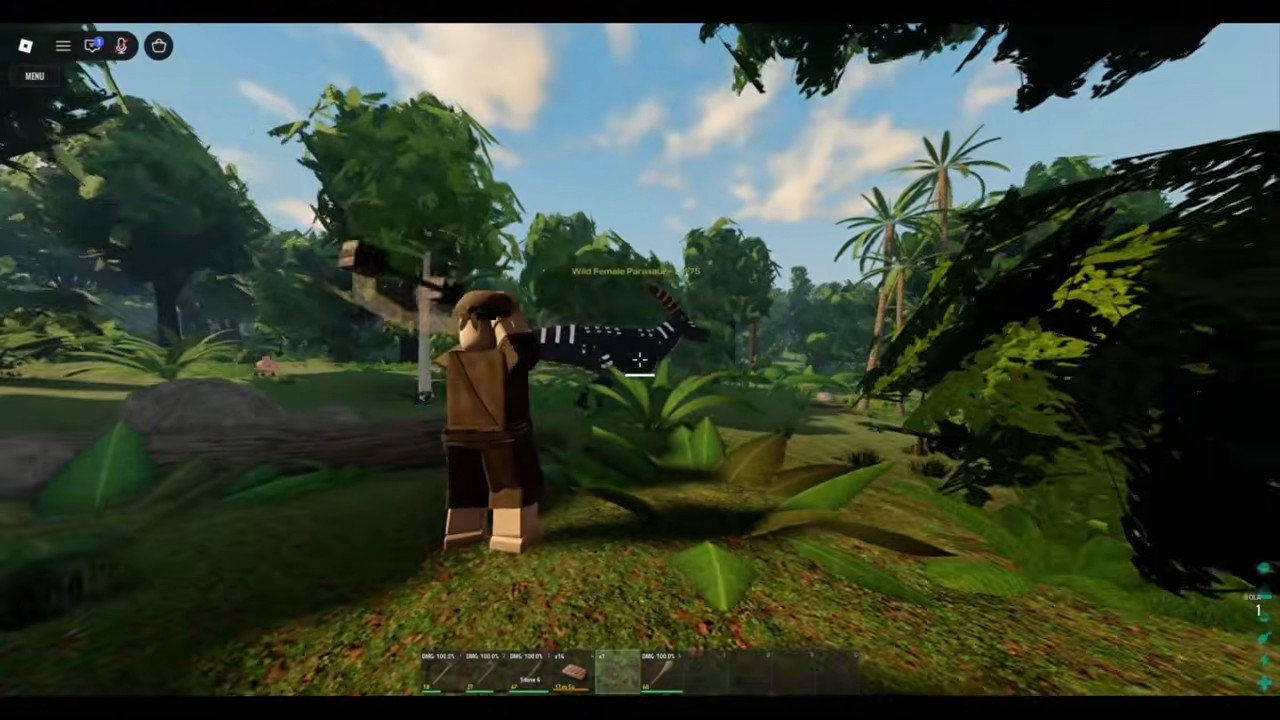
That distinction is what makes the jungle useful for orientation. The large trees and ferns become your local landmarks: if you can still see open sand and shallow water, you are near the shore; if all you can see is dense greenery, you are in the interior. Recognizing which of the two environments you are standing in tells you whether you are at the open shore or in the interior.
Day and night change what you can read
Terrain recognition depends on light, and the day/night cycle changes that. Night is genuinely dark, so the beach and jungle cues are much easier to pick out in daylight than in darkness. In the night scene, a campfire provides light, and walking at night is shown as well.
The practical point is about visibility, not a different terrain: darkness does not turn the shore into jungle. It just makes the same surroundings harder to identify, so expect the terrain to be less readable once the light fades, with a campfire serving as the light source in the night scene.
Using the two terrains to decide where to head
Put the signatures together and they work as a simple orientation system. If you can see open sand, palm trees, rocks and shallow water, you are at the shoreline; if you want the interior, keep moving until ferns and large trees take over. If you are surrounded by ferns and large trees, you are in the jungle interior; if you want the open shore, look for the beach's sand and shallow water again.
This is not a compass or a full map. It is a way to read which side of the landscape you are on: open shore or vegetation interior. For a broader starting point, the PRIMAL Evolved beginner guide covers the opening basics, while this exploration guide stays focused on reading the environment itself.
These two environments are the ones with clear signatures here. Use them as reliable anchors, but do not treat them as a complete list of everything the world contains; other areas may sit beyond the shoreline and jungle you can identify.